

Quick answer: Set protein at 1.6–2.2 grams per kilogram of body weight, set a fat starting range of 0.7–1.0 grams per kilogram, then use carbohydrates for the remaining calories. This supports muscle retention and satiety without turning daily eating into a spreadsheet internship.
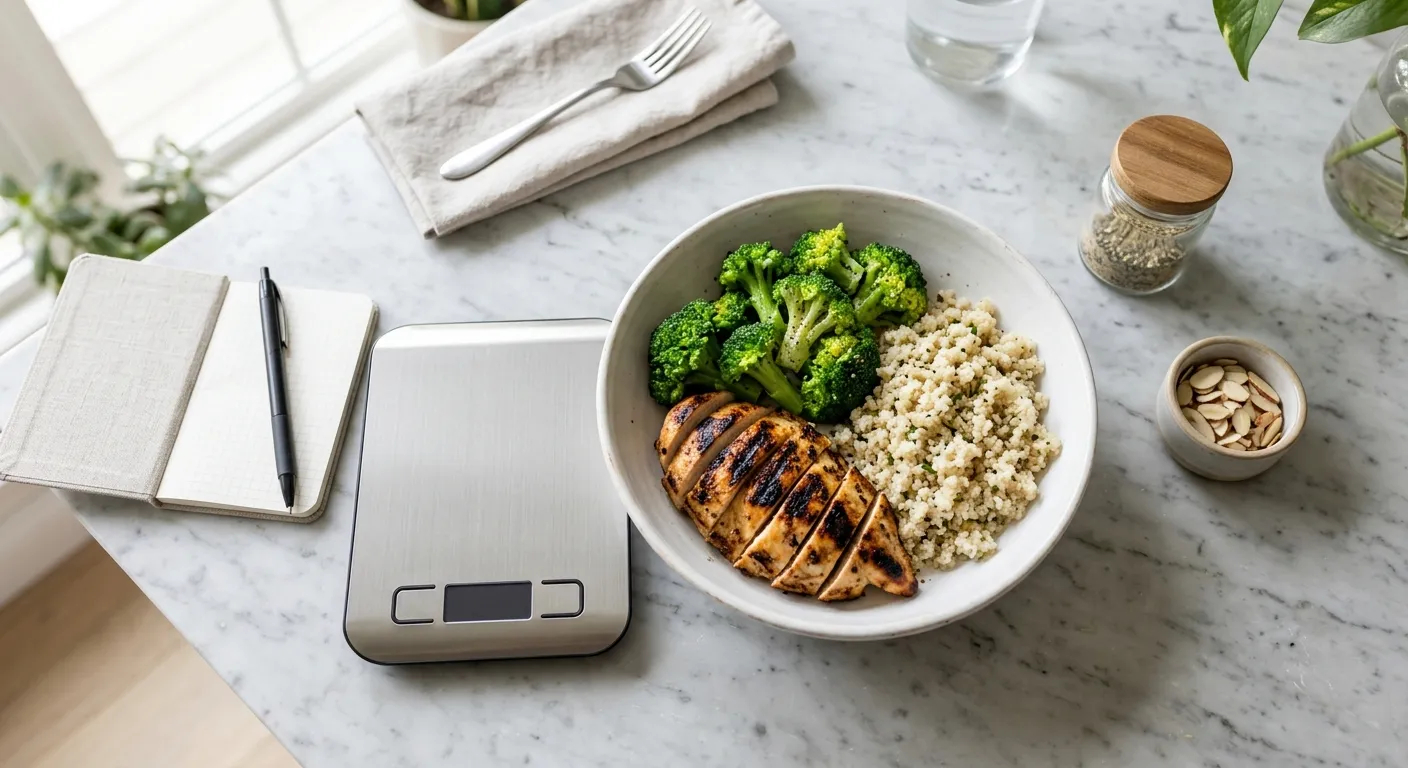
Most people quit macro tracking because the process becomes too burdensome. They begin with big plans, buy a digital scale, and log every spinach leaf. By week two, weighing raw chicken breast at a dinner party can start to feel like a social penalty.
If you want to know how to track macros in a way you’ll still use next month, drop the perfectionism. Diets rarely fail because the math missed five grams of butter; they fail because the system became too irritating to keep up.
The math behind energy density and macro splits
Macronutrients provide energy. Carbohydrates and protein supply roughly four kilocalories per gram, fats provide nine, and alcohol provides seven.
Traditional advice often relies on fixed percentage splits: 40 percent carbs, 30 percent protein, and 30 percent fat. The problem appears when calories change. If calories are substantially reduced while percentages stay fixed, protein grams also decline—which may be unhelpful during a calorie deficit.
Total Daily Calories = (Protein g × 4) + (Carbs g × 4) + (Fat g × 9)
This is a useful approximation. Food-label calorie totals can differ slightly because of fiber, sugar alcohols, rounding, and differences in food preparation.
Body-weight-based protein and fat targets can provide a practical starting structure while calories are adjusted for a fat-loss, maintenance, or weight-gain goal.
| Macronutrient | Caloric Value | Main Roles | Target Starting Point for Healthy Adults |
|---|---|---|---|
| Protein | 4 kcal per gram | Tissue maintenance, enzyme production, satiety | 1.6–2.2 g per kg body mass |
| Fats | 9 kcal per gram | Essential fatty acids, cell membranes, absorption of fat-soluble vitamins | 0.7–1.0 g per kg body mass as a practical starting range |
| Carbohydrates | 4 kcal per gram | Fuel for training and replenishment of glycogen stores | Remaining calories after protein and fat are set |
To manage the numbers without manually calculating every meal, a digital macro tracker can help establish a baseline.
- Protein: Build around protein needs first.
- Fat: Set a practical minimum range that fits your calorie budget.
- Carbohydrates: Use the remaining calories according to preference, training demands, and food availability.
Step 1: Set your protein anchor
Protein has a relatively high thermic effect of food: digesting and processing protein uses roughly 20–30 percent of its energy content. This does not make protein a substitute for an appropriate overall calorie intake, but it can modestly contribute to satiety and energy expenditure.
A meta-analysis by Morton et al. (2018) in the British Journal of Sports Medicine found that, among adults doing resistance training, protein supplementation benefits for gains in fat-free mass appeared to plateau at about 1.6 grams per kilogram per day. The confidence interval suggested that some people may benefit from intakes up to about 2.2 grams per kilogram per day.
Protein anchors the whole framework: setting it at 1.6–2.2 g/kg is a practical range for many healthy, resistance-training adults who want to maintain lean mass while dieting.
At 75 kilograms, this protein range is 120–165 grams per day.
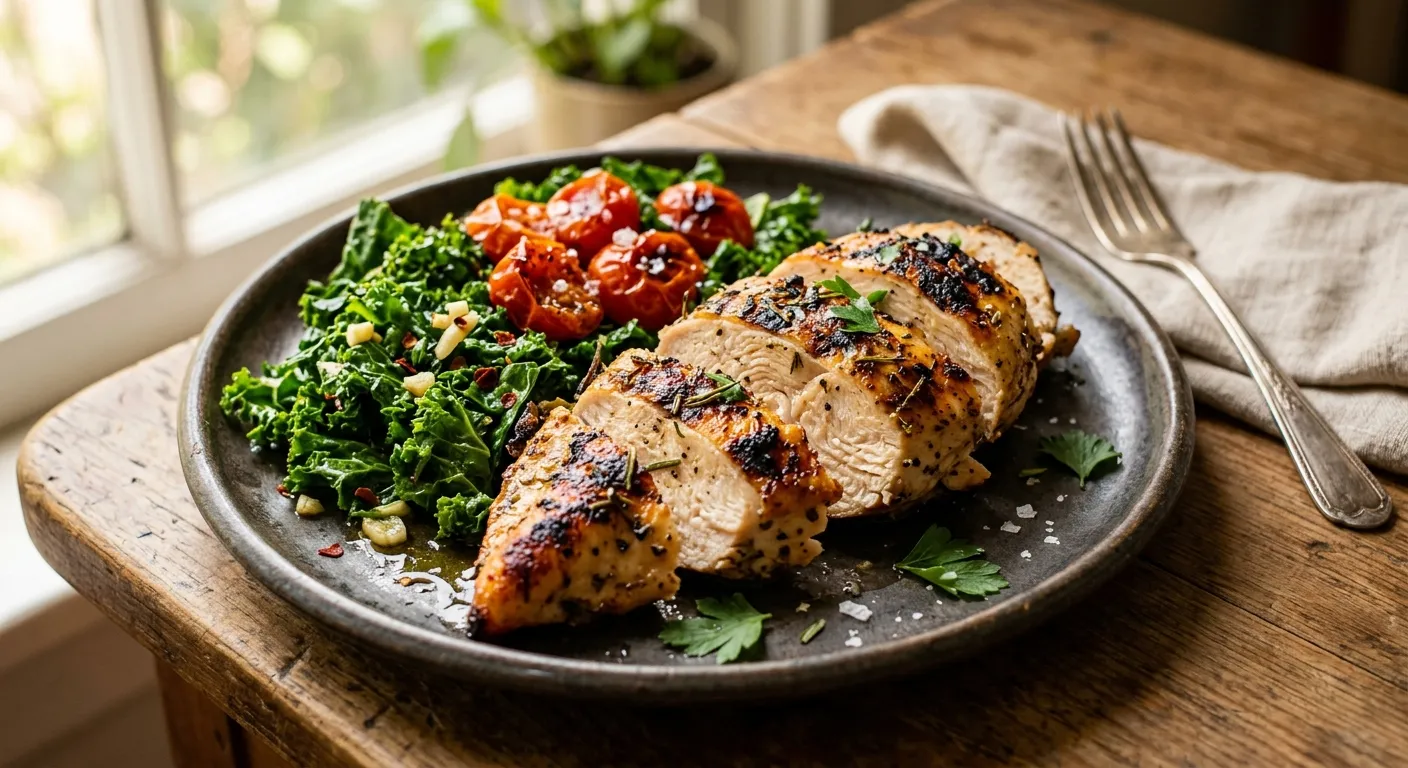
Chicken values depend on whether the weight is raw or cooked. A 200-gram raw, skinless chicken breast typically provides about 44–48 grams of protein, while 200 grams of cooked chicken breast commonly provides about 58–64 grams because cooking reduces water weight.
These targets are intended for generally healthy adults. People with kidney disease, liver disease, or other conditions requiring medically prescribed protein limits should not use generalized protein targets without guidance from their clinical care team.
Step 2 and 3: The fat range and carbohydrate energy
After protein, set a fat target that fits your calorie intake and food preferences. Dietary fat supplies essential fatty acids and helps the body absorb vitamins A, D, E, and K. It is also involved in the production of steroid hormones, including testosterone and estrogen.
A systematic review by Whittaker and Wu (2021) in the Journal of Steroid Biochemistry and Molecular Biology found that low-fat diets were associated with lower total testosterone concentrations in men. The clinical importance of relatively small changes in testosterone is uncertain, and the findings do not establish a specific universal minimum fat intake.
A practical range of 0.7–1.0 grams of fat per kilogram of body weight gives a 75-kilogram person about 53–75 grams of fat daily.
Protein first, then fat; carbohydrates fill the remaining calories. Carbohydrate intake can vary substantially between people. When calorie intake, protein intake, food quality, and resistance training are similar, both lower-carbohydrate and higher-carbohydrate approaches can support fat loss.
Once a meal contains more than three ingredients, weighing every component can get old quickly. A food-photo estimate from ScanFood.AI may reduce logging effort, although estimates from photos are less precise than weighing known ingredients.
- Estimate maintenance calories: Use calorie intake and daily weight trends over at least two weeks.
- Create a calorie change: A reduction of roughly 250–500 kcal per day is a common starting range, but the appropriate size depends on body size, activity, goals, and rate of weight change.
- Set protein: Body weight in kg multiplied by 1.6–2.2.
- Set fat: Body weight in kg multiplied by 0.7–1.0.
- Allocate remaining calories to carbs: Divide remaining calories by four.
Using an AI calorie counter may speed up the calculation phase, but entries should still be treated as estimates rather than exact measurements.
How to track macros: a setup you’ll still use in a month
People often quit macro tracking when they try to log every raw-versus-cooked gram with obsessive precision.
A study by Gardner et al. (2018) in JAMA compared healthy low-fat and healthy low-carbohydrate diets over 12 months. Average weight loss did not differ significantly between the two diet groups. The study did not show that one macro split works best for everyone; participants were encouraged to emphasize minimally processed foods and reduce added sugar, refined flour, and trans fats.
Adherence Rate = (Days within your chosen target range / Total tracked days) × 100
This equation is a personal tracking metric, not a validated clinical measure. A ±10-gram range can be useful for practical tracking, but the importance of a deviation depends on the nutrient, total calorie intake, body size, and the pattern over time.
| Strategy | Daily Time Spent | Psychological Stress | Likely Adherence Pattern |
|---|---|---|---|
| Strict gram precision | Usually higher | Can be high for some people | May be difficult to sustain |
| Tiered macro target | Moderate | Moderate | Often more practical |
| Hand-portion estimates | Usually low | Often lower | Useful when exact logging is impractical |
Perfection is not required for useful tracking. Consistent intake patterns matter more than matching every target exactly each day.
A reliable food diary app can keep friction low enough that tracking survives stressful workweeks.
- Track cooked versus raw consistently: Use the database entry that matches the food’s weighed state.
- Use standard meal templates: Similar breakfasts and lunches reduce decision fatigue.
- Use a reasonable margin: A small range around carbohydrate and protein targets can make tracking more sustainable.
- Log meals before eating when practical: Pre-logging can make it easier to see how a meal fits your daily plan.
Tracking macros for beginners in social situations
How do you track a pint of beer or restaurant pasta? Estimate it, record the estimate, and move on.
The nutrition of bread varies widely by slice size and recipe. A typical slice of sourdough may provide roughly 15–25 grams of carbohydrate; a large slice can provide around 30 grams or more.
One tablespoon of olive oil provides about 14 grams of fat and about 120 kcal. Restaurant portions may contain more than one tablespoon of oil, butter, cream, or dressing.
Restaurant meals can contain unrecorded cooking fats, but there is no universal amount to add. If the preparation is unknown, use the restaurant’s nutrition information when available or choose a reasonable estimate based on the dish and portion size.
An automated photo calorie counter can estimate complex restaurant meals from an image, although the result should be treated as an approximation.
- Prioritize protein early: Including protein-containing foods earlier in the day may make it easier to reach your target when dining out later.
- Estimate restaurant fats thoughtfully: Oils, butter, sauces, cheese, and dressings can meaningfully raise calories.
- Log alcohol explicitly: Alcohol contains 7 kcal per gram, in addition to calories from carbohydrate in many drinks.
- Avoid extreme compensation: Skipping food all day before a social meal can increase hunger and make overeating more likely for some people.
Adjusting targets when progress stalls
Weight loss is not linear. Changes in glycogen, water, sodium intake, digestion, menstrual-cycle phase, and training soreness can temporarily mask fat loss on the scale.
As body weight declines, total energy expenditure generally declines as well because the body requires less energy to maintain and move a smaller mass. People may also unconsciously reduce non-exercise activity thermogenesis (NEAT), such as walking, standing, and general movement.
Hall et al. (2011) in The Lancet developed a mathematical model showing that changes in body weight over time reflect changing energy expenditure as body mass changes. The paper supports the idea that weight loss slows over time; it does not establish that everyone will experience a plateau on a fixed schedule.
New Caloric Target = Current Intake - (Current Intake × 0.05)
This equation calculates a 5 percent calorie reduction. For example, if current intake is 2,000 kcal:
New Caloric Target = 2,000 - (2,000 × 0.05)
New Caloric Target = 2,000 - 100
New Caloric Target = 1,900 kcal
A 5 percent reduction is only one possible adjustment, not a requirement. Before changing intake, review the accuracy and consistency of your logs, average body weight, activity level, sleep, and recent changes in training.
A dedicated calorie counter for weight loss can provide enough data to distinguish a short-term scale fluctuation from a longer-term trend.
- Scale weight unchanged for about two weeks: Review average weights and tracking consistency before changing targets.
- Measurements dropping: If waist or other measurements are declining, the current plan may still be working despite little scale movement.
- Adjust calories gradually if needed: Reducing carbohydrates, fats, or both can lower calories while maintaining protein.
- Re-evaluate activity levels: Daily step counts and other movement often decline unconsciously during a diet.
Organizing meals through a structured meal planner can help stabilize intake without requiring constant food decisions.
Read next
- The Science of Caloric Deficits and Metabolic Adaptation
- How to Adjust Protein Intake for Resistance Training
Frequently asked questions
How do I track macros when cooking mixed meals for a family?
Weigh the finished dish to get its total cooked weight in grams. Log the recipe ingredients using entries that match how they were measured, then weigh your portion and calculate its share of the finished dish.
Should I weigh my food raw or cooked?
Neither method is inherently more accurate. Raw weighing can be convenient for recipes because package nutrition information often refers to raw food. Cooked weighing can work equally well when you use a database entry for the cooked food and keep the method consistent.
Do I need to track fiber separately from total carbohydrates?
Tracking total carbohydrates may be enough for general macro tracking. For adults, U.S. Dietary Guidelines use a benchmark of about 14 grams of dietary fiber per 1,000 kcal. For example, a 2,000-kcal diet would provide about 28 grams of fiber. Increase fiber gradually and drink adequate fluids, particularly if your usual intake is low.
What should I do if I go over my macro targets?
Resume your usual plan at the next meal or the next day rather than trying to “erase” the intake through extreme restriction. One higher-calorie day can contribute to a calorie surplus, but long-term trends—not a single day—have the greatest effect on body-weight change.
Long-term setup that actually sticks
Macro tracking is an educational tool, not a life sentence. It can teach you the basic composition of foods so you can eventually make more informed choices without a scale.
If daily logging keeps falling apart, a photo-based estimate may be a lower-effort option, which is why we built ScanFood.AI. Keep in mind that photo estimates are less exact than weighing foods or using verified restaurant nutrition information.
Set your protein target, choose a workable fat range, let carbohydrates fill the remaining calories, and allow a realistic margin of error. People who are pregnant or breastfeeding, have a history of an eating disorder, take glucose-lowering medication, or have kidney disease, liver disease, diabetes, or other chronic medical conditions should seek individualized guidance from an appropriately qualified clinician before making major dietary changes.
Sources
- Using mHealth technology to enhance self-monitoring for weight loss: a randomized trial - PubMed
- Comparing Self-Monitoring Strategies for Weight Loss in a Smartphone App: Randomized Controlled Trial - PubMed
- Defining Adherence to Mobile Dietary Self-Monitoring and Assessing Tracking Over Time: Tracking at Least Two Eating Occasions per Day Is Best Marker of Adherence within Two Different Mobile Health Randomized Weight Loss Interventions - PubMed
- Dietary Self-Monitoring Through Calorie Tracking but Not Through a Digital Photography App Is Associated with Significant Weight Loss: The 2SMART Pilot Study-A 6-Month Randomized Trial - PubMed