


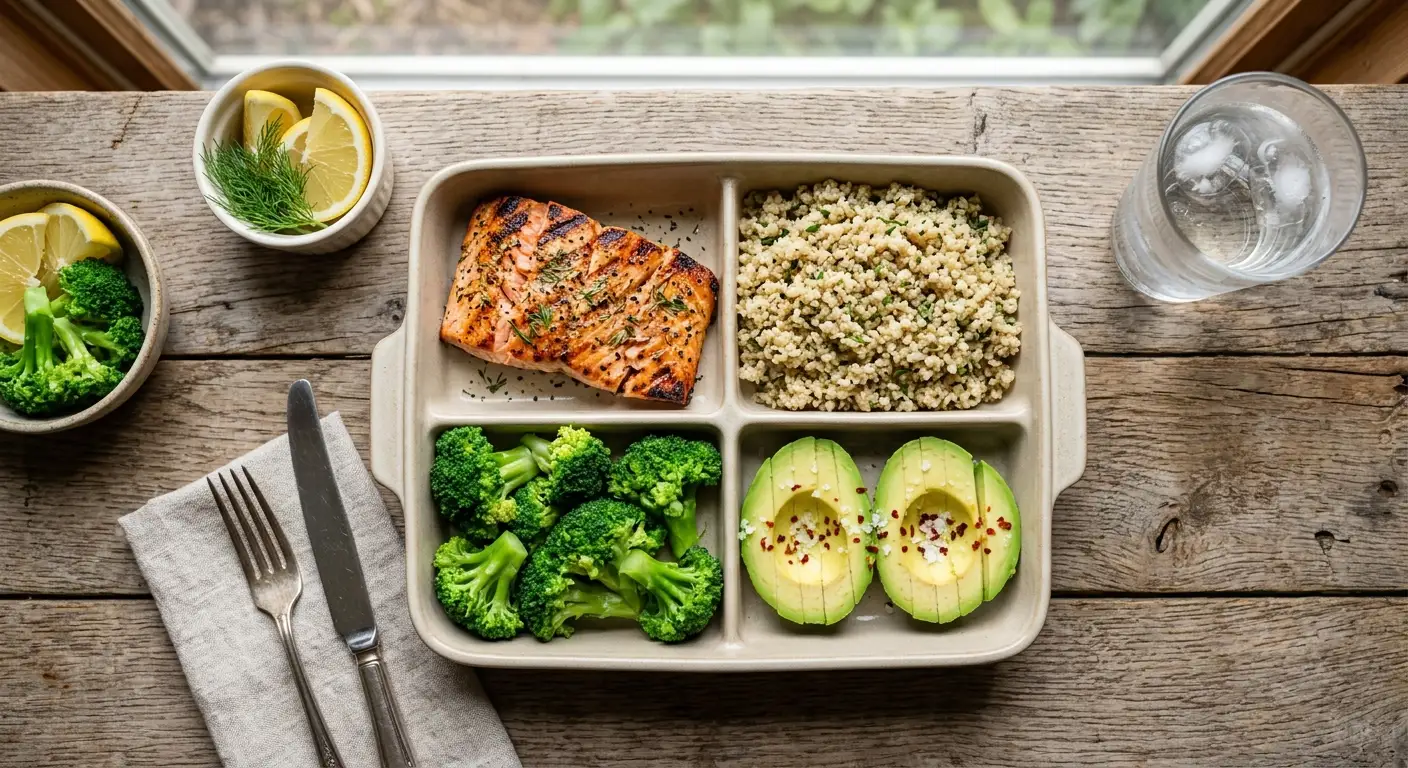
Quick answer: Set protein at 1.6–2.2 grams per kilogram of bodyweight, fats at 20%–35% of total calories, and use carbohydrates for the remaining calories.
Dieters love magic numbers. The internet is packed with rigid splits—40% carbs, 30% protein, 30% fat—as though your metabolism checks whether the fractions are tidy. It does not. Carbs are not inherently fattening, insulin is not an instant fat-storage switch, and dietary fat does not automatically become body fat.
Calculating macros comes down to basic math and human physiology, not arbitrary ratios. Establish your calorie baseline first; from there, protein, fat, and carb targets take less than five minutes to calculate.
These ranges are general starting points for healthy adults. People with kidney disease, liver disease, diabetes treated with glucose-lowering medication, eating disorders, pregnancy, or other medical conditions should discuss major dietary changes with a qualified clinician or dietitian.
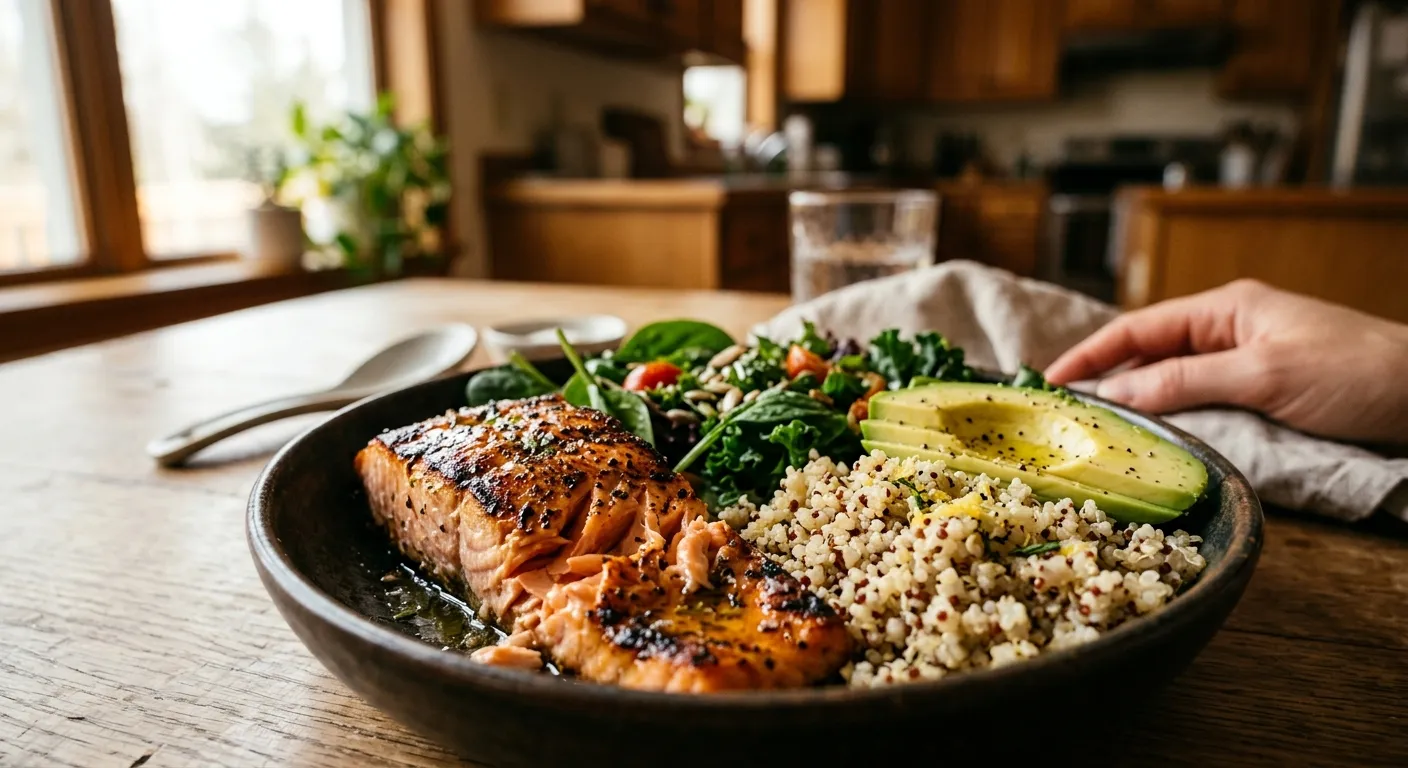
Why energy balance drives weight change, while macros affect diet quality and lean-mass retention
Over time, a sustained calorie deficit generally leads to weight loss, while a sustained calorie surplus generally leads to weight gain. Scale weight is a blunt metric, however: it includes changes in water, glycogen, fat mass, lean tissue, and digestive contents.
This is where macro tracking can help. Protein supplies amino acids used throughout the body, including for muscle protein synthesis and repair. Dietary fat provides essential fatty acids and helps absorb vitamins A, D, E, and K. Carbohydrates can support training performance, particularly during repeated high-intensity exercise.
An AI calorie counter can help establish your baseline intake, while macro targets can make it easier to maintain adequate protein and dietary fat during fat loss.
- Protein: about 4 calories per gram; supplies amino acids, including essential amino acids.
- Carbohydrates: about 4 calories per gram; can replenish glycogen used during exercise.
- Fats: about 9 calories per gram; supply essential fatty acids and support cell structure and hormone production.
- Alcohol: about 7 calories per gram; provides energy but is not an essential nutrient.
How to calculate macros for your goal: Step-by-step from bodyweight
Forget fixed percentages. At 1,500 calories, a generic 30% protein target gives you about 113 grams of protein:
- 1,500 × 0.30 = 450 protein calories
- 450 ÷ 4 = 112.5 grams of protein
For a 90-kilogram person who resistance trains, that may be below a useful protein target. At 4,000 calories, the same percentage provides 300 grams of protein:
- 4,000 × 0.30 = 1,200 protein calories
- 1,200 ÷ 4 = 300 grams of protein
That amount is more than many people need.
Calculate protein and fat first, then use carbohydrates for the remaining calories.
A major meta-analysis by Morton et al. (2018) found that, among healthy adults doing resistance training, gains in fat-free mass appeared to plateau at roughly 1.6 grams of protein per kilogram of bodyweight per day. However, the upper end of the confidence interval was about 2.2 g/kg/day, so higher intakes may be useful for some people.
For people dieting while resistance training, Helms et al. (2014) suggested higher protein intakes—approximately 2.3–3.1 grams per kilogram of fat-free mass per day—for lean resistance-trained athletes in a calorie deficit. That is not the same as 2.3–3.1 grams per kilogram of total bodyweight.
For dietary fat, the Acceptable Macronutrient Distribution Range for adults is 20%–35% of total energy intake. A practical bodyweight-based starting range is often about 0.6–1.0 g/kg/day, but fat intake should also provide essential fatty acids and fit the person’s total calorie target, food preferences, and health needs.
| Target Phase | Protein Target | Fat Target | Carbohydrate Target |
|---|---|---|---|
| Fat Loss (Cut) | Often 1.6–2.2 g/kg bodyweight; lean, resistance-trained people may use higher protein relative to fat-free mass | Usually 20%–35% of calories; often about 0.6–1.0 g/kg as a planning range | Remaining calories |
| Maintenance | Often 1.2–2.0 g/kg bodyweight, depending on training and preferences | Usually 20%–35% of calories | Remaining calories |
| Muscle Gain (Bulk) | Often 1.6–2.2 g/kg bodyweight for resistance training | Usually 20%–35% of calories | Remaining calories |
Setting protein in grams rather than as a fixed calorie percentage can prevent very low protein intakes at low calorie targets and unnecessarily high protein intakes at high calorie targets.
Setting target ranges instead of fixed numbers
Hitting every macro to the exact gram is rarely necessary. If your protein target is 180 grams and you eat 172 grams on one day, that does not meaningfully determine whether you gain or lose muscle. Your average intake over days and weeks matters more than a single meal or a single day.
There is no universal research-based rule that everyone must stay within exactly 10 grams of protein, 5 grams of fat, and 15 grams of carbohydrates. A practical approach is to use ranges that are accurate enough to support your calorie and protein goals without making food tracking overly rigid.
Flexible ranges leave room for social meals, different food choices, and normal life. Use a reliable macro tracker or a simple food diary app to stay reasonably close to your calorie, protein, and fat targets.
| Macro | Target Per Kg | Total Grams | Calories | Percentage of Total |
|---|---|---|---|---|
| Protein | 2.0 g/kg | 150 g | 600 kcal | 27% |
| Fat | 0.8 g/kg | 60 g | 540 kcal | 25% |
| Carbohydrate | Balance | 265 g | 1,060 kcal | 48% |
This example assumes a 75-kilogram person eating 2,200 kcal per day:
- Protein: 150 g × 4 kcal/g = 600 kcal
- Fat: 60 g × 9 kcal/g = 540 kcal
- Remaining calories: 2,200 − 600 − 540 = 1,060 kcal
- Carbohydrates: 1,060 ÷ 4 = 265 g
Once a meal has more than three ingredients, weighing every component gets old quickly. Honestly, I photograph the plate and let ScanFood.AI do the arithmetic.
Evaluating macro ratios for weight loss and muscle retention
What about low-carb versus high-carb diets? One version of the low-carb argument proposes that insulin makes carbohydrates uniquely fattening by preventing fat oxidation. Research does not support the idea that carbohydrate intake creates a metabolic loophole that overrides calorie intake.
Hall et al. (2015) studied adults with obesity in a tightly controlled metabolic ward setting. Participants consumed a baseline diet, then completed either a calorie-matched carbohydrate-restricted diet or a calorie-matched fat-restricted diet while protein intake was held constant. The fat-restricted diet produced greater measured body-fat loss over the short study period, while the carbohydrate-restricted diet produced greater total weight loss, largely consistent with changes in body water and glycogen.
Energy intake, protein intake, food quality, adherence, and physical activity all affect results. Higher-carb and higher-fat approaches can both work when they help a person maintain an appropriate calorie intake and meet nutrient needs.
- Using total bodyweight in severe obesity: Can overestimate protein needs. Estimated lean mass, adjusted bodyweight, or a clinically appropriate target weight may be more useful than current bodyweight alone.
- Ignoring cooking oils and liquid fats: Can add substantial uncounted calories to meals.
- Chasing rigid macro percentages: Can produce impractical protein or fat targets when calorie targets change.
- Failing to adjust intake as body mass and activity change: Can make a previous calorie target less appropriate over time.
When calories and protein are similar, low-carbohydrate and low-fat diets can both produce fat loss. Small differences in short-term body-weight change may reflect water and glycogen as well as fat mass.
How and when to recalculate your target macros
Your energy needs are not fixed. As body mass declines, the energy needed to maintain that body mass usually declines as well. Dieting can also reduce spontaneous physical activity and may produce some adaptive reduction in energy expenditure.
If your average bodyweight trend has not changed for about two weeks despite consistent logging, review your data before changing calories. Two weeks is a useful checkpoint, not proof that “metabolic damage” or adaptation is the cause. Water retention, inaccurate logging, changes in activity, and an energy deficit that is smaller than expected can all explain a plateau.
- Verify tracking accuracy: Check untracked bites, cooking fats, drinks, sauces, and restaurant portions.
- Review activity: Step count, exercise volume, and non-exercise movement often change during dieting.
- Make a modest calorie adjustment if needed: A reduction of roughly 5%–10% can be a reasonable starting point for some people, preferably while preserving adequate protein and micronutrient intake.
- Recalculate protein if bodyweight changes substantially: Keep protein within a suitable range for your body size, training, and goal.
- Monitor another 2–3 weeks: Use average bodyweight and other measures, such as waist circumference or training performance, before making repeated changes.
A calorie counter for weight loss helps you track daily averages over time. A structured meal planner can make adjustment periods less chaotic.
- Bodyweight static for about 14 days: May indicate a smaller-than-expected calorie deficit, inconsistent tracking, reduced activity, or temporary water retention.
- Loss of roughly 5% or more of total body mass: Is a reasonable time to review calorie needs, since a smaller body generally expends less energy.
- Unmanageable fatigue, poor sleep, persistent dizziness, or declining training performance: Can be signs that the diet, training load, recovery, or overall energy intake needs review.
- A major shift in physical activity: Moving from an office job to field work, starting endurance training, or greatly reducing daily steps can materially change energy needs.
Reviewing your calorie and macro targets after a meaningful bodyweight or activity change is more useful than automatically changing them on a rigid schedule.
Practical macro planning without losing your mind
Is tracking every bite realistic forever? For most people, no. Strict tracking can be a temporary tool for learning portions and identifying calorie-dense foods rather than a permanent requirement.
You learn what 150 grams of chicken breast looks like, how much peanut butter really fits on a tablespoon, and what a pint of beer does to your daily calorie budget. In practice, that knowledge can make later tracking less demanding.
When using a photo calorie counter, you can reduce the friction of manual food entry. Food values vary by brand, preparation method, and water content, so use package labels or a reliable food database when precision matters.
- Chicken breast, raw: Approximately 21–24 g protein per 100 g.
- Greek yogurt, 0% fat: Approximately 9–11 g protein per 100 g.
- Egg whites: Approximately 10–11 g protein per 100 g.
- Firm tofu: Approximately 12–17 g protein per 100 g, depending on brand and firmness.
- Low-fat cottage cheese: Approximately 10–13 g protein per 100 g.
Read next
Frequently asked questions
How do I calculate macros for weight loss if I am significantly overweight?
Using current total bodyweight can produce very high protein targets for people with obesity. Depending on the situation, estimated lean mass, adjusted bodyweight, or a clinically appropriate target weight may be more useful starting points.
Rather than automatically using one formula, prioritize a calorie target that supports gradual progress, adequate protein, dietary fat within the 20%–35% calorie range, fiber-rich foods, and micronutrient-dense foods. If you have kidney disease, liver disease, diabetes treated with medication, or another medical condition, seek individualized guidance before making large dietary changes.
What are the best macro ratios for weight loss?
There is no universally best macro ratio for fat loss. A sustained calorie deficit is the primary driver of weight loss, while adequate protein and resistance training can help retain lean mass.
For healthy adults who resistance train, protein intakes around 1.6–2.2 g/kg/day are commonly used. Split the remaining calories between carbohydrates and fats according to dietary preference, training demands, culture, and food tolerance, while keeping fat intake generally within 20%–35% of calories.
How often should I update my macro targets?
Review your targets after a meaningful change in bodyweight, activity, training volume, or progress. Losing or gaining roughly 5% of body mass is a reasonable prompt to reassess, but it is not a mandatory cutoff.
Also review calorie intake and logging accuracy if your average weight trend is unchanged for around two weeks despite consistent adherence. Weekly adjustments are often unnecessary because normal fluid shifts can obscure short-term fat loss.
Do I need different macros on workout days versus rest days?
Not necessarily. Consistent daily calories and protein can work well for many people. Some people prefer more carbohydrates on training days and fewer on rest days because it may support workout performance or make the plan easier to follow.
What matters most is that average calorie intake, protein intake, food quality, and training are appropriate over time. Carb cycling is an optional planning strategy, not a requirement for fat loss or muscle gain.
How do I convert macro grams into total daily calories?
Multiply daily protein grams by four, fat grams by nine, and carbohydrate grams by four. Add the three totals to estimate daily energy intake.
For example:
- Protein: 150 g × 4 kcal/g = 600 kcal
- Fat: 60 g × 9 kcal/g = 540 kcal
- Carbohydrates: 200 g × 4 kcal/g = 800 kcal
- Total: 600 + 540 + 800 = 1,940 kcal
Making your macros work in real life
Knowing how to calculate macros removes much of the guesswork from nutrition. Protein supports lean-mass retention during dieting, dietary fat provides essential fatty acids and supports nutrient absorption, and carbohydrates can help fuel training.
You do not need rigid percentages or entire banned food groups to make sustained progress. Consistency matters more than daily perfection. If daily logging keeps falling apart, a photo takes three seconds—that is why we built ScanFood.AI.
Use realistic target ranges, review them as body mass and activity change, and pay attention to long-term trends rather than daily scale fluctuations. If you have a chronic health condition such as kidney disease, liver disease, or diabetes, discuss major dietary changes with your doctor or a registered dietitian before changing your intake.
Sources
- Development of Prediction Equations for Estimated Energy Requirements - Dietary Reference Intakes for Energy - NCBI Bookshelf
- Applications of the Dietary Reference Intakes for Energy - Dietary Reference Intakes for Energy - NCBI Bookshelf
- Summary - Dietary Reference Intakes for Energy - NCBI Bookshelf
- Reference Tables - Dietary Reference Intakes - NCBI Bookshelf